Cold Storage in Saudi Arabia: A 2026 Guide to Frozen and Ambient Solutions
Cold storage in Saudi Arabia has become the backbone of a fast-growing food, pharmaceutical, and e-commerce economy. As summer temperatures across the Kingdom regularly push past 45°C, businesses cannot afford gaps in the cold chain. One failed compressor or a few hours at the wrong temperature can spoil an entire shipment. This guide explains how frozen and ambient warehousing work together, what to look for in 2026, and how to keep products safe from the loading dock to the last mile.
Whether you move seafood, dairy, vaccines, or packaged dry goods, choosing the right temperature zone matters. Below we break down each storage type, compare their uses, and share practical tips drawn from real warehouse operations in Riyadh, Jeddah, and Dammam.
Why Cold Storage in Saudi Arabia Is Growing So Fast
The Kingdom’s push toward food security and local manufacturing under Saudi Vision 2030 has driven heavy investment in temperature-controlled logistics. Grocery delivery, cloud kitchens, and pharmaceutical distribution all depend on reliable cold rooms.
Demand is no longer seasonal. Year-round imports of frozen meat and fish, plus a booming online grocery sector, keep refrigerated space in near-constant use. Operators that once treated chilled warehousing as a niche now see it as core infrastructure.
The cost of a broken cold chain
Temperature abuse is expensive. Spoiled stock, rejected deliveries, and regulatory penalties add up quickly. For regulated goods, the Saudi Food and Drug Authority (SFDA) sets strict handling and traceability rules, and non-compliance can halt distribution entirely.
Frozen Storage: Keeping Products Deep-Cold and Stable
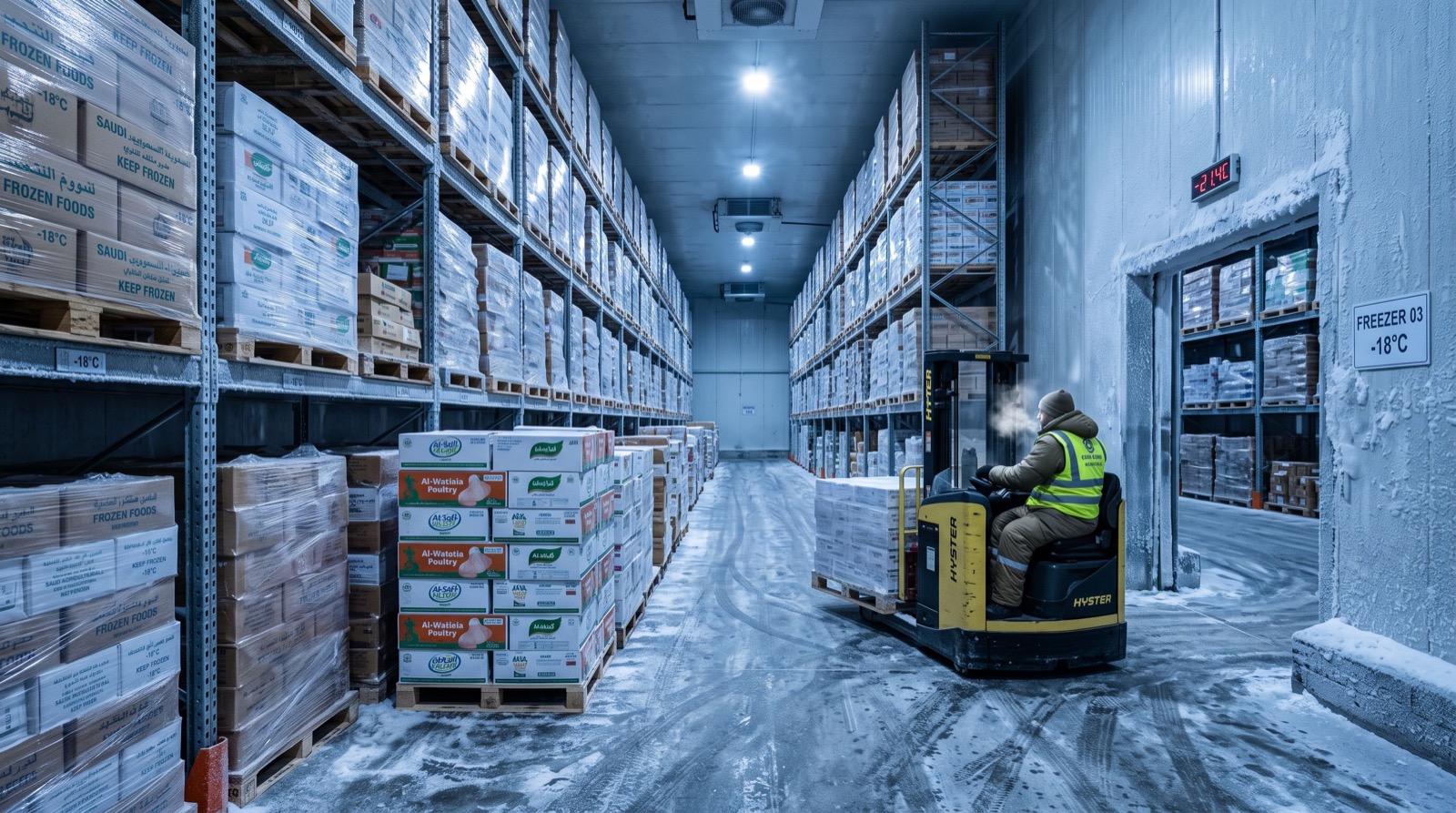
Frozen warehousing holds goods at roughly -18°C or below, the standard for long-term preservation of meat, poultry, seafood, and ice cream. At these temperatures microbial growth effectively stops, so shelf life stretches from days to many months.
A well-run Frozen Storage facility does more than run cold. It manages airflow, defrost cycles, and door discipline so that temperature stays uniform across every pallet position, even near entry points where warm air sneaks in.
- Deep-freeze rooms held at -18°C to -25°C for bulk inventory.
- Blast freezing to pull product temperature down quickly and protect texture.
- Insulated staging areas that limit thermal shock during loading.
- Continuous data logging for audit-ready temperature records.
Ambient Storage: The Everyday Workhorse
Not every product needs refrigeration. Dry goods, canned food, packaging, textiles, and shelf-stable consumer items do best in a clean, dry, room-temperature environment. Reliable Ambient Storage in Saudi Arabia keeps these items protected from heat, humidity, dust, and pests without the energy cost of a cold room.
Good ambient space still needs control. In a climate this hot, ventilation, roof insulation, and humidity management decide whether cardboard stays firm and labels stay legible through the summer.
When ambient beats refrigerated
Ambient warehousing is the smarter choice when a product is shelf-stable and sensitive mainly to moisture or physical damage rather than temperature. It lowers cost, simplifies handling, and frees scarce refrigerated capacity for goods that truly need it.
Frozen vs Ambient: A Quick Comparison
| Factor | Frozen Storage | Ambient Storage |
|---|---|---|
| Typical temperature | -18°C and below | 15°C to 25°C |
| Best for | Meat, seafood, ice cream, vaccines | Canned goods, packaging, textiles, electronics |
| Energy cost | High | Low |
| Shelf-life impact | Months to years | Depends on product packaging |
| Key risk | Compressor failure, door breaches | Humidity, heat spikes, pests |
How to Choose the Right Cold Storage Partner in 2026
The provider you pick shapes your product quality and your compliance record. Experienced, quality service providers combine the right equipment with disciplined processes and transparent reporting.
- Check temperature validation. Ask for mapping reports that prove every zone holds its target, not just the average.
- Confirm backup power. Generators and redundant refrigeration protect you during outages.
- Review traceability. Real-time monitoring and alerts should flag a drift before it becomes spoilage.
- Verify compliance. SFDA-aligned handling, cleaning, and pest control are non-negotiable for food and pharma.
- Assess location. Proximity to ports and major cities in Riyadh, Jeddah, or Dammam cuts transit time and risk.
An operational tip from the warehouse floor
One overlooked detail makes a measurable difference: door discipline. Fast-closing strip curtains, scheduled loading windows, and dock seals keep warm outside air from flooding a freezer every time a forklift enters. Teams that enforce this see fewer temperature excursions and lower energy bills across the hot months.
Best Practices for Protecting Your Cold Chain
- Pre-cool trucks before loading so product never sits in warm trailers.
- Rotate stock with first-in, first-out (FIFO) to avoid aged inventory.
- Keep detailed digital logs for audits and insurance claims.
- Train staff on thermal shock and safe handling of frozen goods.
- Schedule preventive maintenance before, not during, peak summer.
Energy Efficiency and Cost Control in a Hot Climate
Refrigeration is the single largest energy cost in most cold warehouses, and in Saudi Arabia that cost climbs steeply through summer. Smart operators treat efficiency as a design decision, not an afterthought. The savings go straight to the bottom line.
Modern facilities use high-density insulation, LED lighting, and variable-speed compressors that match cooling output to demand instead of running flat out. Automated doors and air curtains cut the warm-air intrusion that forces compressors to work harder. Together these measures can trim energy use significantly while holding temperatures rock-steady.
Where the savings come from
- Thicker insulation panels reduce heat gain through walls and roofs.
- Variable-speed drives cut compressor energy during off-peak loads.
- Rapid-roll doors and air curtains limit cold-air loss at the dock.
- Heat-recovery systems reuse waste heat for water or office zones.
- Solar-ready roofs offset daytime cooling demand.
Energy efficiency also protects product. A facility that cools efficiently recovers temperature faster after a door opening, which means fewer excursions and more consistent quality for everything on the racks.
Frequently Asked Questions
What temperature is used for frozen storage in Saudi Arabia?
Frozen storage typically holds products at -18°C or colder. Deep-freeze rooms for long-term meat and seafood inventory often run between -18°C and -25°C to keep quality stable for months.
Is ambient storage the same as a normal warehouse?
Not quite. Ambient storage keeps goods at a controlled room temperature with managed humidity, ventilation, and pest control. In Saudi Arabia’s climate, that control is essential to protect shelf-stable products through the summer.
How do I know if my product needs cold storage?
If spoilage, bacterial growth, or texture loss happens at room temperature, the product needs chilled or frozen storage. Shelf-stable items that only risk moisture or physical damage are usually fine in ambient space.
What should I ask a cold storage provider before signing a contract?
Ask for temperature mapping reports, backup power details, real-time monitoring, SFDA-aligned compliance records, and references from clients in your sector. These confirm the facility can protect your goods.
Conclusion
Reliable cold storage in Saudi Arabia is about matching each product to the right temperature zone and partnering with a provider that proves its performance. Combine disciplined frozen warehousing for perishables with efficient ambient space for shelf-stable goods, and you protect quality while controlling cost. In 2026, with demand rising and standards tightening, a well-chosen storage partner is one of the smartest investments your supply chain can make.